 info@forpeat.eu


The ForPeat project unites scientists, land managers, and communities to restore forested peatlands through Open Labs, sustainable practices, and data-driven policy. Read more.
A European effort to restore peatland ecosystems
Peatlands are often out of sight — quiet, waterlogged places where time moves slowly. Yet beneath their mossy surface lies a powerful climate ally. These unique wetlands store enormous amounts of carbon and provide essential ecosystem services, from clean water to biodiversity protection. Unfortunately, many peatlands across Europe have been drained, converted, or degraded over the last century. Once carbon sinks, they have turned into carbon sources, releasing greenhouse gases and losing their ecological resilience.
To reverse this trend, the ForPeat project is taking action. Funded by the European Union’s Horizon Europe programme, ForPeat brings together 22 partners from 15 countries with one clear mission: to develop, test, and demonstrate sustainable forest management and restoration practices for Europe’s forested peatlands.
Eight Open Labs, one shared goal
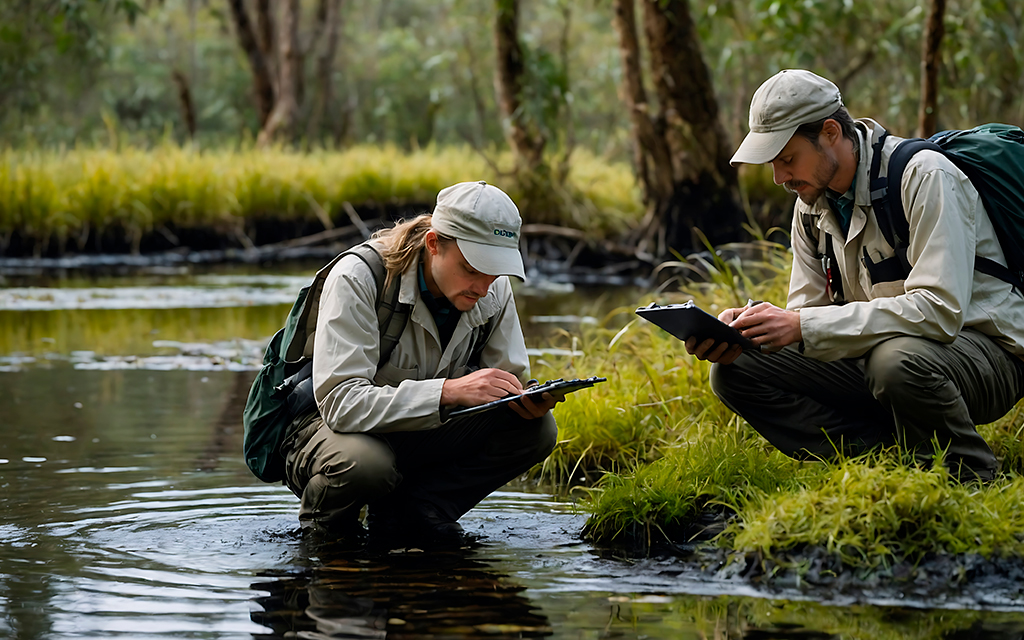
At the heart of ForPeat are its 8 Open Labs, real-world testing sites distributed across Europe (Portugal, Italy, the Netherlands, Austria, Sweden, Finland, Poland, and Estonia). Each Open Lab represents a different climate, forest type, and management context yet all share a common mission: to explore and demonstrate sustainable management practices for forested peatlands. In these open laboratories, ForPeat teams are:
- Testing restoration and forest management methods, such as rewetting drained sites.
- Monitoring greenhouse gas fluxes, soil health, water, and biodiversity using advanced field instruments and remote sensing techniques.
- Working closely with local communities and landowners to ensure that restoration and forest management is both ecologically effective and socio-economically viable.
The Open Labs act as long-term reference sites where practical solutions can be refined, compared, and replicated elsewhere in Europe. They are also platforms for citizen science and local engagement, bringing people directly into the process of restoration and monitoring.
A people-centred approach
Restoring peatlands isn’t just a technical challenge. Many forested peatlands are located on private or managed land, so long-term success depends on collaboration with those who live and work there. ForPeat integrates Social Sciences and Humanities (SSH) approaches and citizen science into its activities. Researchers investigate local perceptions, economic motivations, and governance structures to understand how restoration can meet real-world needs. By connecting science with local knowledge, ForPeat ensures that restoration efforts are inclusive, practical, and sustainable.
From data to decisions: informing EU policy
Beyond the field, ForPeat aims to influence the way Europe thinks about forested peatlands. The project is developing policy recommendations and best practices that align with the EU Biodiversity Strategy for 2030, the European Green Deal, the Climate Law, and the Nature Restoration Law. These policy inputs are based on real data from the Open Labs — providing decision-makers with solid, science-based evidence of what works (and what doesn’t) when managing peat soils.
By translating complex field data into clear, actionable insights, ForPeat helps bridge the gap between research and policy, turning experiments into strategies that can guide national restoration plans.
Climate solutions beneath our feet
Peatlands may not make headlines like glaciers or coral reefs, but they hold one of the keys to a stable climate. The ForPeat project is shining a light on these hidden ecosystems, demonstrating how data, science, and collaboration can help restore balance to Europe’s landscapes. Through its network of Open Labs, innovative monitoring systems, and community engagement, ForPeat is not just studying peatlands — it is building the foundations for their recovery.
Every restored peatland means more carbon stored, more biodiversity protected, and a more resilient future for all.