Peatlands: Ancient Ecosystems at Risk
Peatlands are unique wetland ecosystems formed by the slow accumulation of plant material in waterlogged conditions. Because the lack of oxygen prevents full decomposition, this plant matter gradually turns into peat. A slow process that it takes about 1,000 years to form just one meter (Craft, 2022). Although they cover only 3.8% of Earth’s total global surface area, peatlands hold a pivotal role in the global climate system. They store about one quarter of the world’s soil carbon (about 600,000 Mt), which is twice as much as all the world’s forests combined (UNEP, 2024).
When they remain intact, peatlands act as carbon sinks and help regulate water cycles. When drained or exploited for agriculture, forestry, or peat extraction, however, they release enormous amounts of carbon dioxide, methane, and nitrous oxide. This intensifies climate change, heightens the risk of floods, droughts, and wildfires, and sets off destructive feedback that threatens ecosystems and communities. In the global context, nearly 12% of peatlands are degraded to the extent that peat is no longer actively forming or the accumulated peat is disappearing (UNEP, 2024). In Central Europe, over 90% have been altered or used for agriculture, forestry, or extraction (Joosten 2010).
ForPeat:
Restoring Resilience
to Europe’s Peatlands
The objective of the ForPeat project is to develop sustainable land management practices and restoration techniques aimed at enhancing soil organic carbon sequestration, improving soil health, and promoting biodiversity. This involves implementing monitoring systems, modelling tools, and nature-based solutions that align with climate adaptation strategies, reducing carbon emissions and contributing to the long-term resilience of peatland ecosystems.
Advancing Knowledge, Restoring Balance
ForPeat will expand knowledge and data on Europe’s forest peatlands, deepening our understanding of sustainable management, carbon sequestration, and the complex links between ecological, economic, and social factors.
The project will collect information on carbon storage, water quality, biodiversity, and the effects of forest management in different European peatland areas. Sustainable practices will be tested in real conditions, with a strong focus on rewetting and biodiversity conservation. By combining AI-powered remote sensing with ground-based measurements, ForPeat will establish a standardised, long-term monitoring system providing accurate assessments and guiding future climate-smart management of peatland ecosystems.

Open Labs:
Living Laboratories
for Restoration
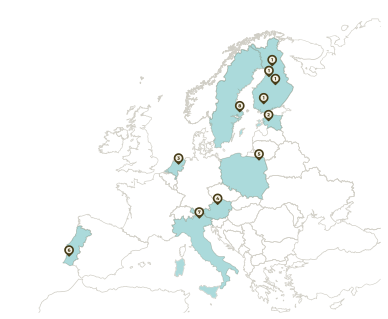
Across Europe, ForPeat has established 8 Open Labs. These are real-world testing grounds where sustainable forest peatland management practices are put into action. These sites generate crucial data on carbon sequestration, biodiversity, water quality, and soil health, providing both the scientific foundation and practical examples needed to scale up restoration efforts.
Working closely with local stakeholders, the Open Labs demonstrate how alternative forest practices can tackle soil degradation while strengthening ecosystem resilience. Key activities include monitoring greenhouse gas fluxes, nutrient leaching, and biodiversity. Together, these open laboratories offer decision-makers tangible evidence of successful approaches, paving the way for sustainable peatland management across Europe.