info@forpeat.eu


Open Lab 4
Karlstifter Moor, Austria
Location:
Karlstifter Moor, Austria / Waldviertel / Karlstift
Type of ecosystem:
Raised bog
Size:
23 ha
Site manager:
Waldgut Pfleiderer
OL Coordinator (organisation and country):
BOKU University, Austria
The Karlstifter
Moore Nature
Reserve
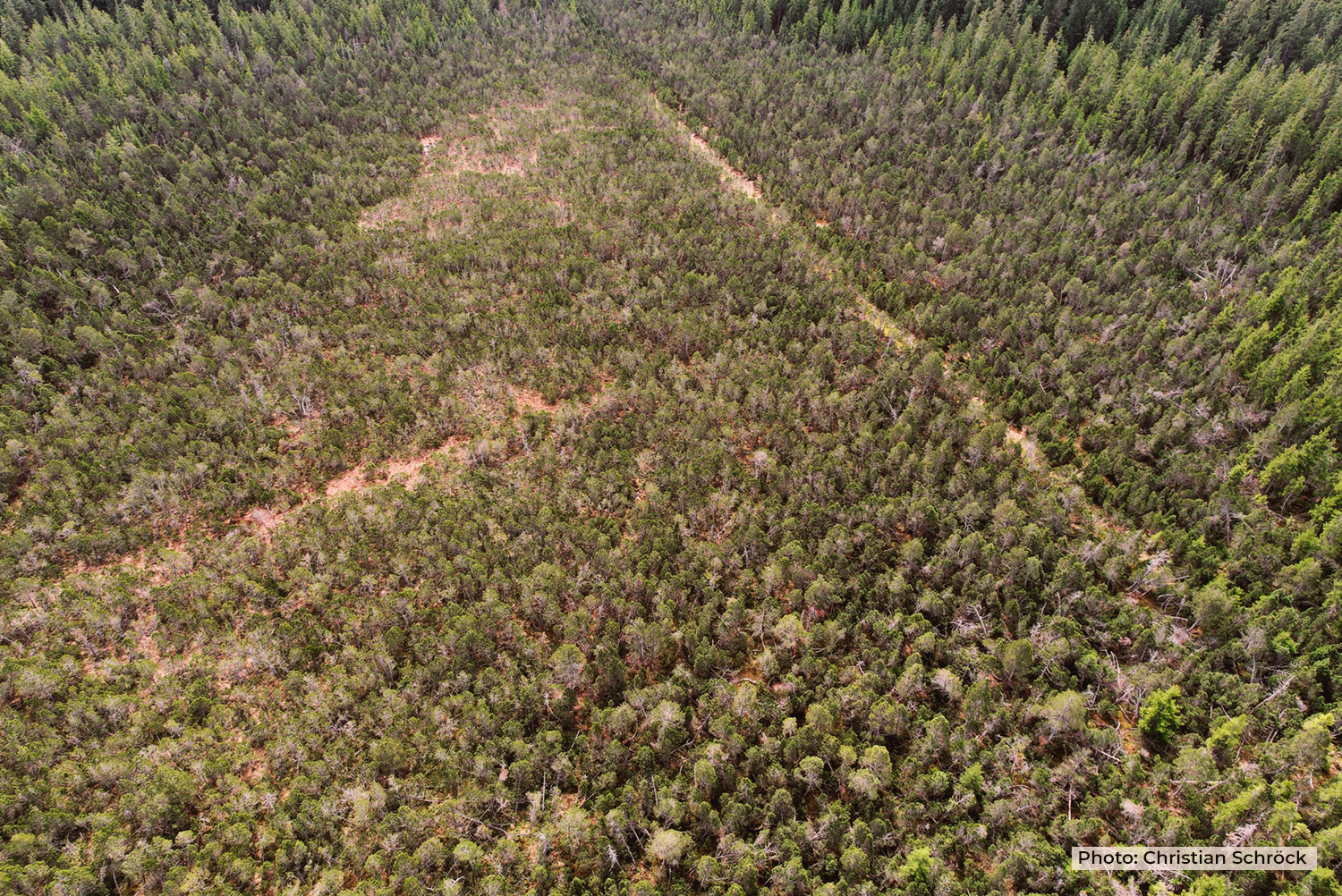
The Karlstifter Moore form a protected complex of five raised bog areas located in the municipality of Bad Großpertholz, in northern Austria. Designated as a nature reserve in 1981, the site includes Sepplau, Spanschleißlau, Durchschnittsau, Große Heide, Kleine Heide, southern and northern Wurzelsteigmoor, Kranawettau and Lattenwegau. Today, the protected area covers approximately 195 hectares.
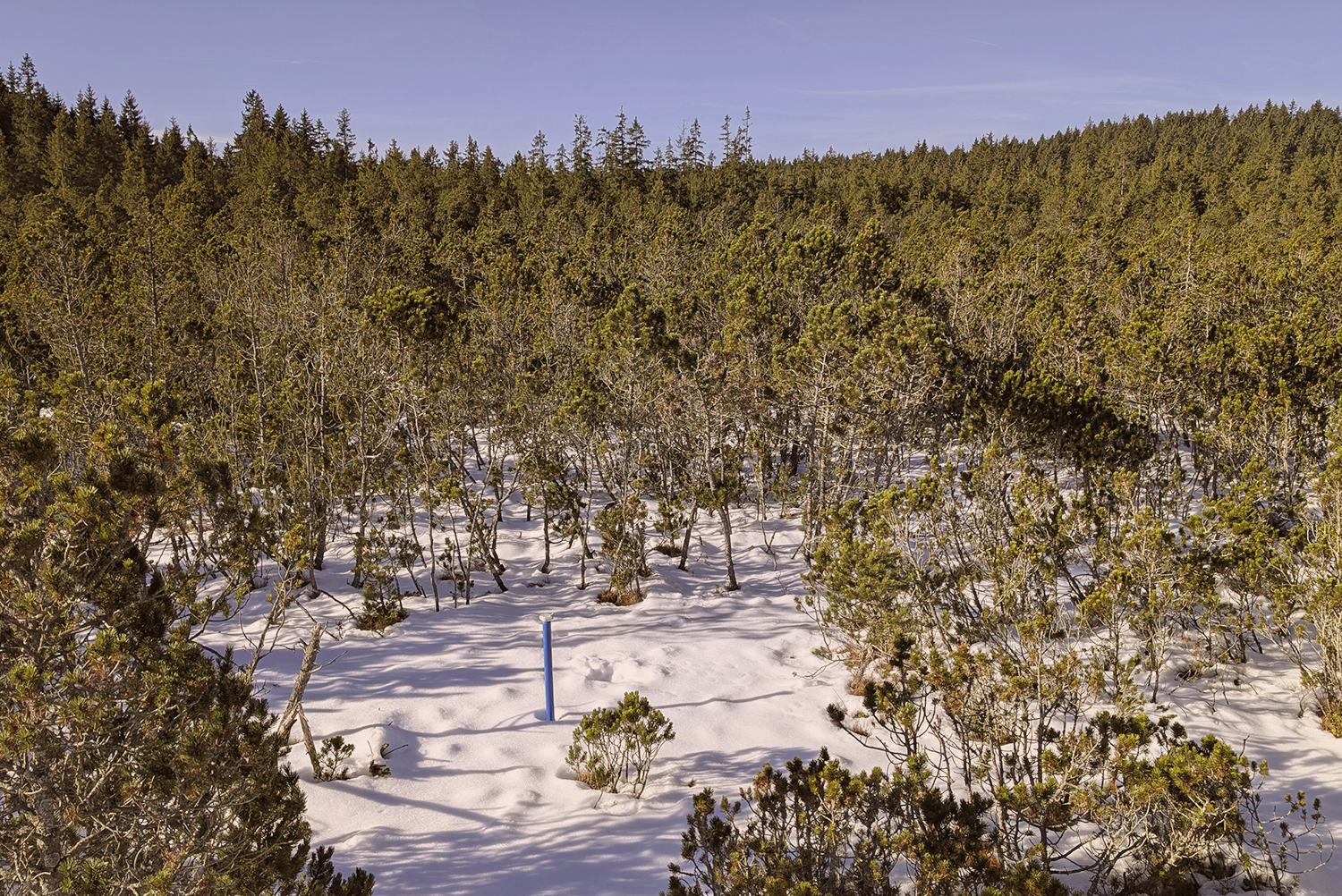
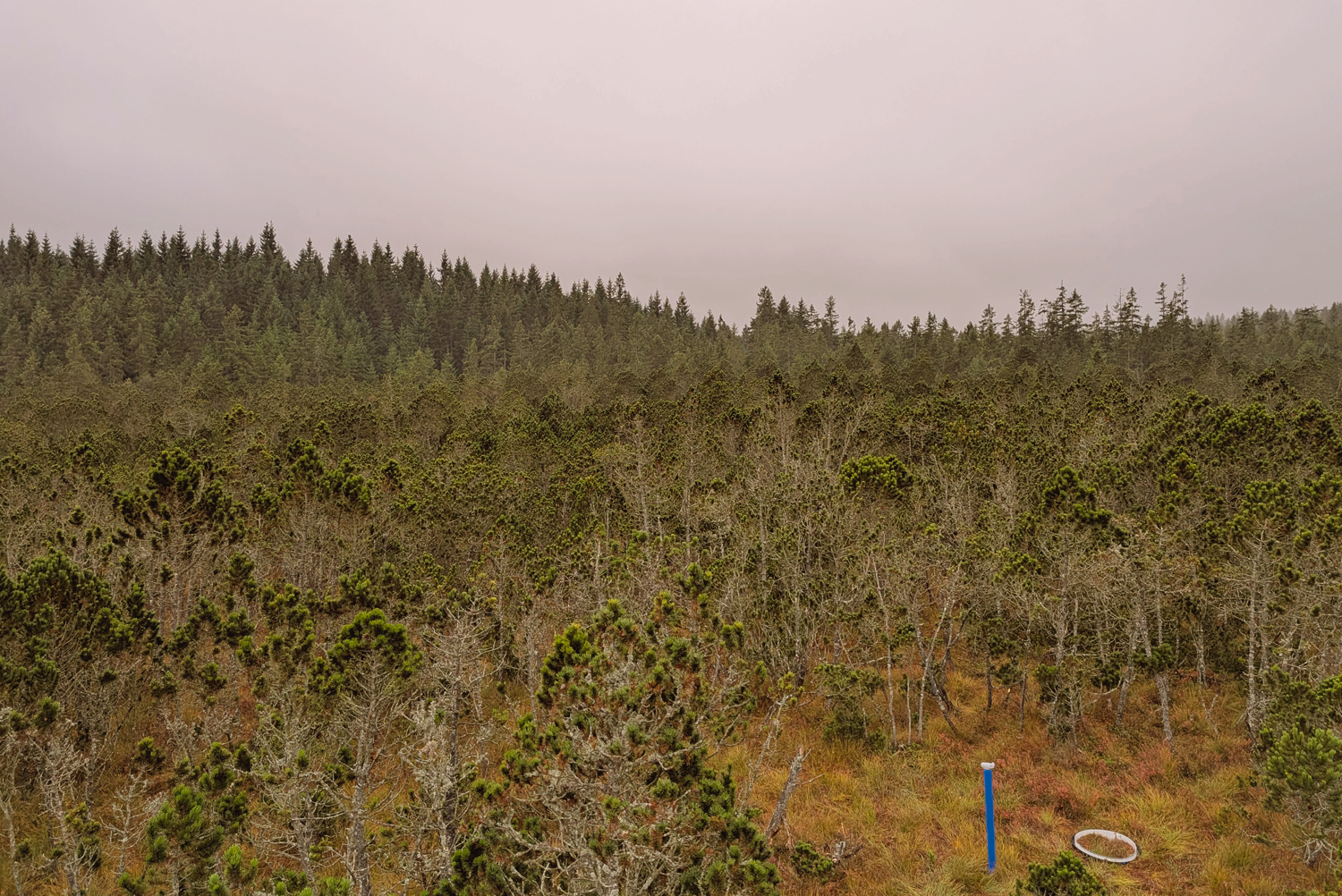
These are acidic, oligotrophic raised bogs — nutrient-poor ecosystems that have developed over millennia through peat accumulation. Much of the area is currently covered by dwarf mountain pine (Pinus mugo subsp. rotundata), a characteristic but increasingly dominant woody species. The site is also designated as a biogenetic reserve, forming part of a European network aimed at conserving representative habitats and endangered species.
From Drainage
to Conservation
Like many Central European peatlands, Austrian raised bogs were widely drained during the 19th and early 20th centuries to facilitate forestry and peat extraction. The Karlstifter Moor was no exception. Drainage ditches were installed to improve access and stimulate timber production. Over decades, these hydrological alterations led to peat oxidation, subsidence, and significant carbon loss.
By the late 20th century, recognition of peatlands as biodiversity refuges and major carbon stores shifted conservation priorities. Forestry ceased roughly 50 years ago in this area, and the site has remained out of economic use since then.
Current forest management in the surroundings of the Karlstifter Moore is characterized by low-intensity, carefully regulated interventions. Management activities are largely limited to selective single-tree harvesting, small-scale maintenance measures, and sustainable reforestation concepts, while new drainage, reactivation of ditches, infrastructure development, or intensive harvesting regimes are avoided.
The ForPeat
Pilot Site
Within ForPeat, Open Lab #4 focuses on a degraded raised bog within the Karlstifter Moor complex. Over the past century, drainage has lowered the water table, enabling the expansion of woody vegetation — primarily Pinus × rotundata, a hybrid mountain pine. Today, most of the area is densely forested, with only a few remaining open patches where typical bog vegetation persists.
This tree encroachment is a classic symptom of long-term drainage. Add increasing temperatures and prolonged dry periods, and the transformation from open peatland to pine-dominated woodland accelerates. What was once a carbon sink risks becoming a carbon source.
Approaches
Under Study
Today, the bog is unmanaged and economically inactive. The established pine stands have no commercial value due to poor growth conditions and low timber quality. What remains is a semi-natural bog forest shaped by past drainage.
Currently, restoration planning is underway, with the main goal of rewetting the bog to restore its natural water balance and prevent further degradation. The restoration measures will be conducted in the course of the project LIFE AmooRe, which is also operating in the area of Karlstifter Moor.
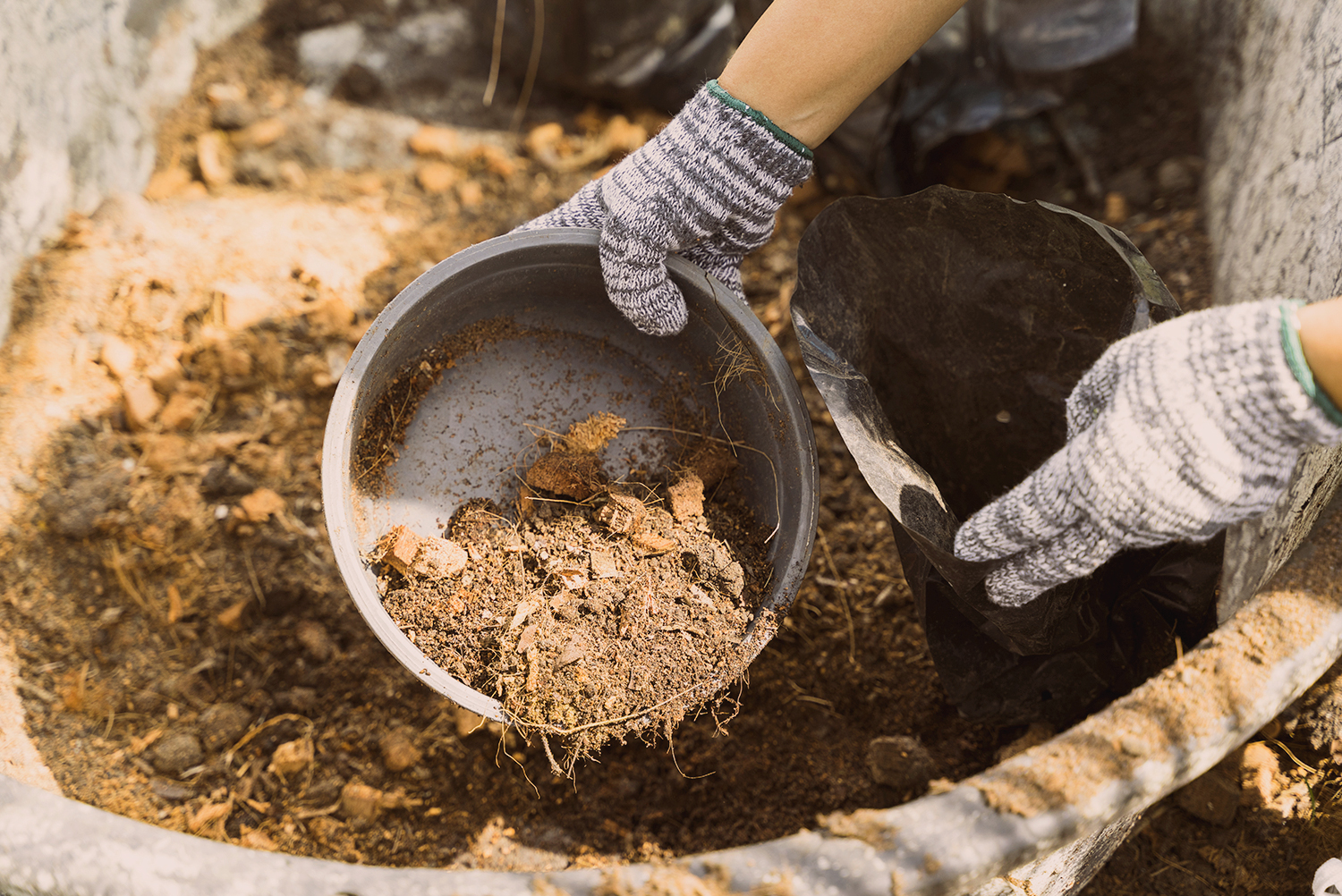
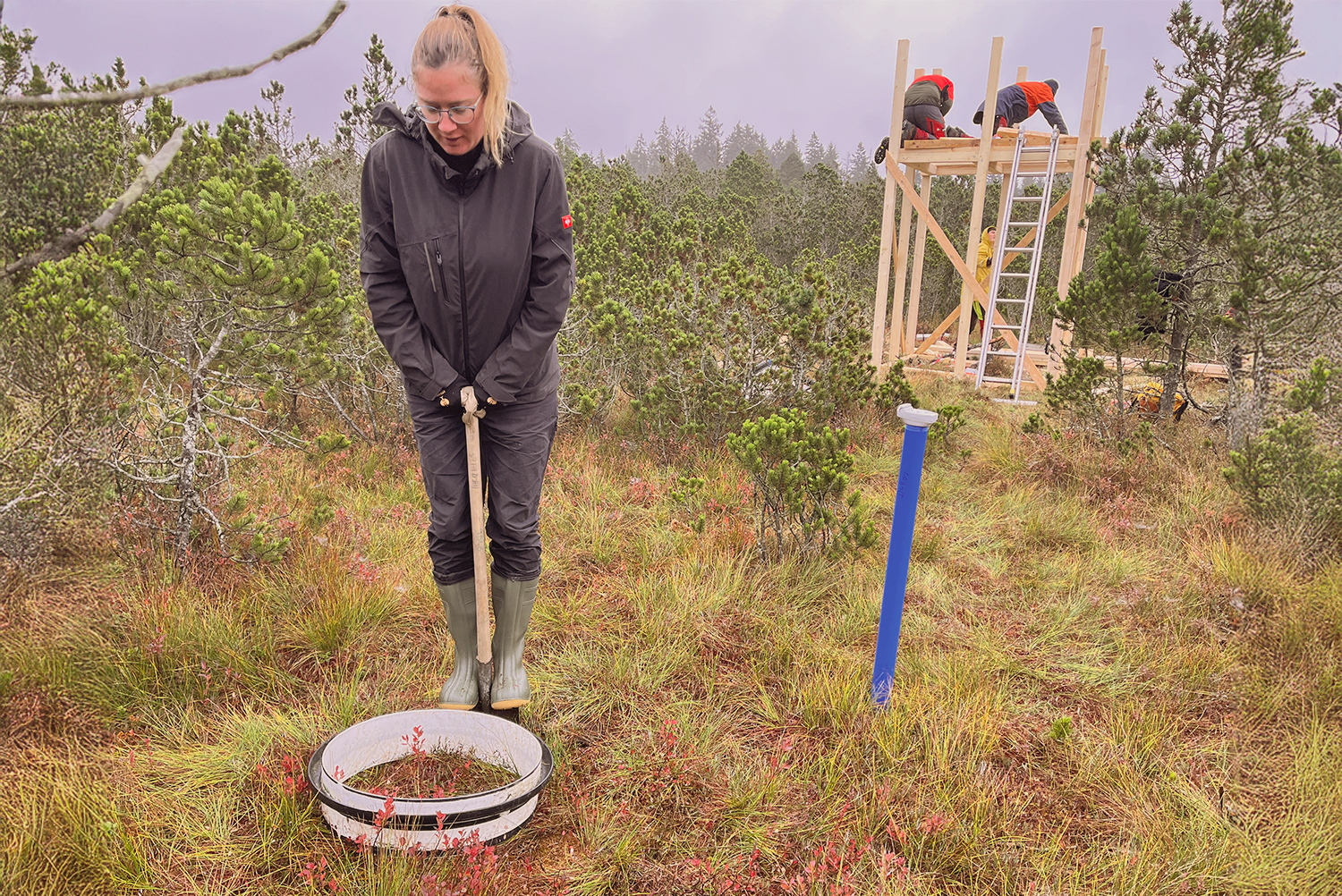
Within ForPeat, the scientific focus lies in comprehensive greenhouse gas monitoring and ecosystem assessment. The site provides an exceptional opportunity to quantify carbon dynamics before and after rewetting interventions. Continuous measurements of CO₂, CH₄ and H₂O fluxes are carried out using an eddy covariance tower, allowing ecosystem-scale assessment of carbon exchange. These measurements are complemented by transportable trace gas analysers, water level monitoring, meteorological observations, soil sampling and biodiversity surveys. Additional indicators, such as Normalised Difference Vegetation Index, help track vegetation dynamics and ecosystem recovery over time.
Research Team
The Natural Resources Institute Austria
Open Lab #4 is coordinated by the University of Natural Resources and Life Sciences, Vienna (BOKU). The work is led by: