 info@forpeat.eu


Open Lab 8
Sweden
Location:
Siggefora, Uppsala, Sweden
Type of ecosystem:
Peatland
Size:
Two rewetted sites: 7.5 + 1.5ha, Two reference sites: 2.5 + 2.5ha, One natural site: 2.5ha
Site manager:
Swedish Church (rewetting sites), Local landowner co-op (reference sites), Private owner (natural site)
OL Coordinator (organisation and country):
Uppsala University, Sweden


Swedish Peatlands
in Context
Sweden hosts some of Europe’s most extensive peatland systems, covering around 15–20% of its land area and playing a crucial role in carbon storage, biodiversity and water regulation. However, throughout the 20th century, large areas were drained for forestry, agriculture and peat extraction, lowering water tables and transforming many peatlands from long-term carbon sinks into sources of greenhouse gas emissions. Today, Sweden is actively reversing this trend, with a strong national commitment to peatland restoration and rewetting supported by substantial public investment towards 2030.
The ForPeat
Site
The ForPeat Open Lab, Uppsala Mires, is located within a fragmented boreal landscape close to Siggefora (approximately 30 km west of Uppsala), defined by gentle terrain, with elevation differences ranging from 0 to 25 metres. The area forms a diverse mosaic of coniferous forests, forested peatlands, and open peatlands, reflecting decades of human intervention and land-use change.
Although sparsely populated, the area also includes a nearby lake that attracts visitors during the summer, adding a recreational dimension to an otherwise production-oriented landscape.


Research
Activities
A rewetting experiment is taking place in this Open Lab.
The experiment is based on two paired comparisons between rewetted and reference peatlands. One pair involves sites where forest harvesting took place prior to rewetting, while the other retains forest cover, allowing for the assessment of different restoration pathways. Rewetting is implemented under Sweden’s national programme, primarily through ditch blocking, with landowners financially compensated by the government.
The Open Lab is highly valuable since it reflects typical drained forested peatlands currently targeted for rewetting in Sweden. Its combination of different management histories, peatland sizes, catchment characteristics, and mixed land ownership provides a realistic and policy-relevant setting to assess the ecological, hydrological and biogeochemical impacts of rewetting, and to generate knowledge applicable to wider restoration efforts.
Monitoring Activities
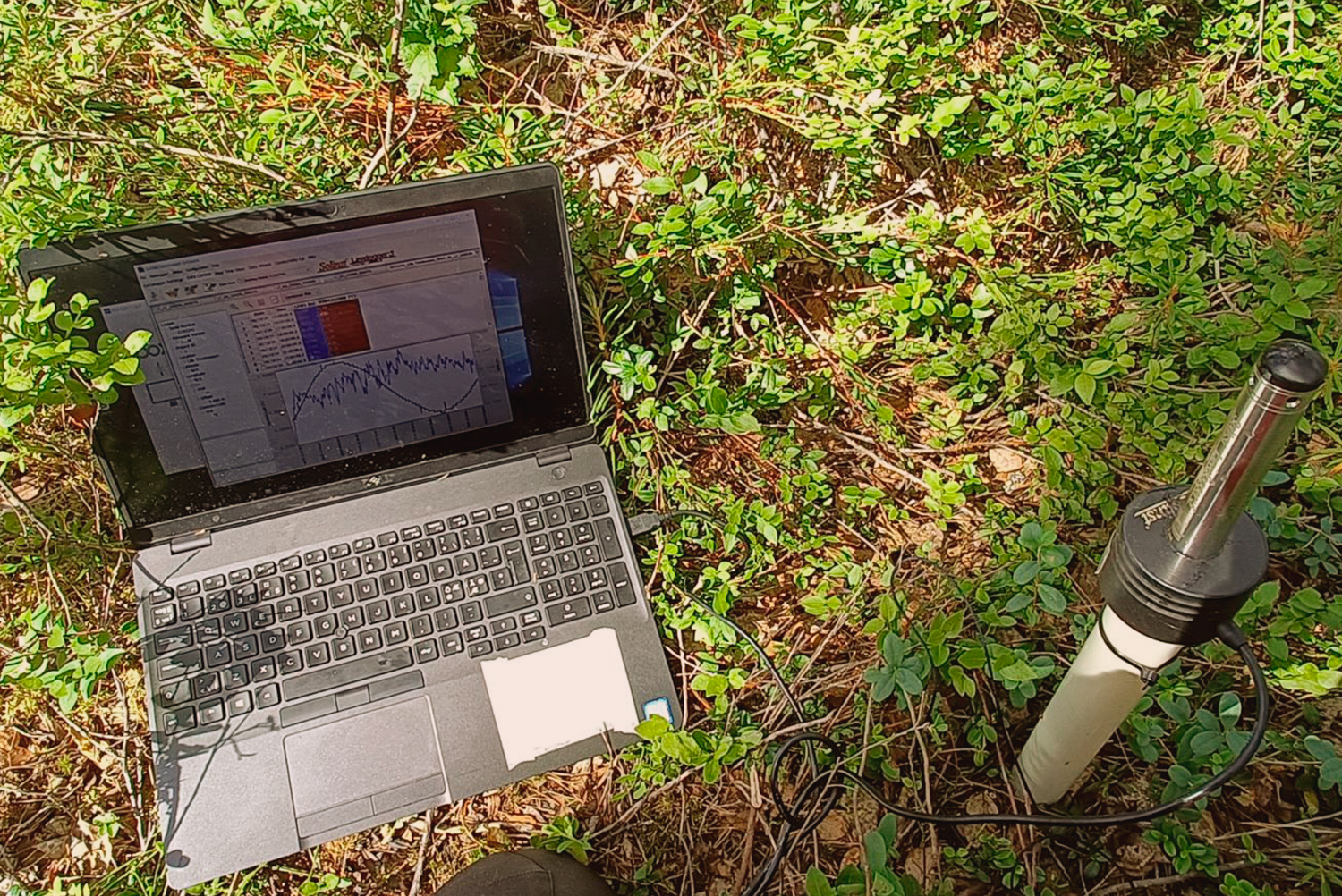
A monitoring programme is being implemented in the Open Lab to capture hydrological, ecological and biogeochemical dynamics. Groundwater levels are continuously measured using pressure transducers, while water flow is monitored through weirs to assess hydrological changes following rewetting. Water quality is analysed through parameters such as dissolved organic carbon, nutrients, pH and electrical conductivity.
Vegetation dynamics are tracked using permanent quadrats to monitor changes in plant communities over time. Greenhouse gas fluxes (CO₂ and CH₄) are measured using chamber-based methods, complemented by analyses of peat properties, including bulk density and nitrogen and carbon content. In addition, biodiversity and soil processes are assessed through the study of microbial communities, ground-dwelling beetles and bird populations.
Research Team
Open Lab #8 is coordinated by Uppsala University. The work is led by:


